The question comes up on detailing forums. One owner on a detailing forum this summer had just had the car detailed and saw trails around the hood and trunk in sunlight, and asked whether it was a bad job or whether they were being picky. Here’s how to tell.
What holograms are, and how they get there
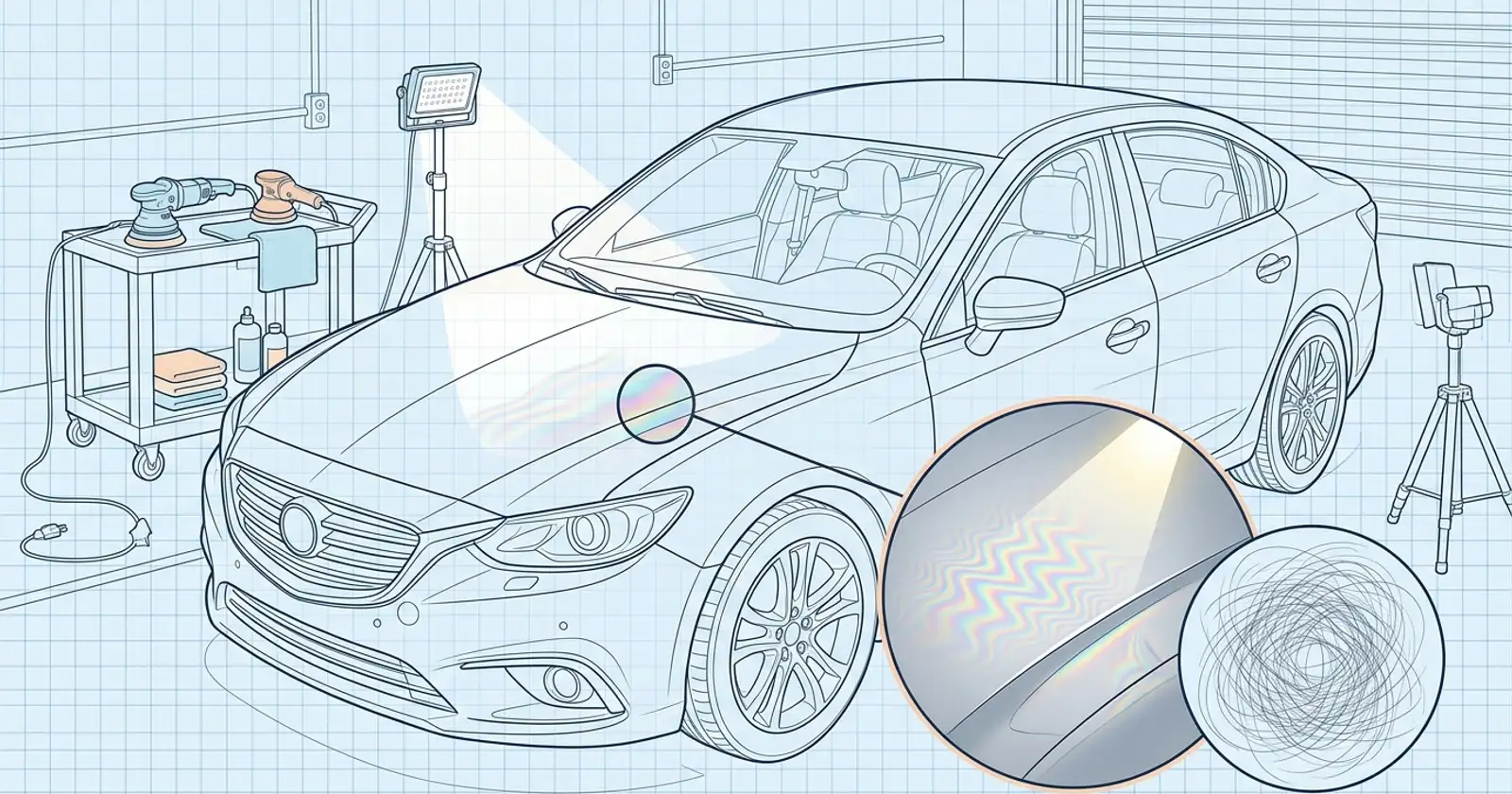
One pro-detailer Q&A page describes holograms as micro scratches left by a rotary polisher’s fixed circular motion combined with an aggressive pad and product. It says that if your paint has them, the person polishing it didn’t follow up with the refining steps. A Texas detailer’s guide puts it the same way: when a compound is used without a proper finishing stage, its marks stay visible as holograms, sometimes appearing in direct sun hours or days after the job.
That delay has another cause too. The same page notes that some shops apply a glaze with heavy fillers, which hides swirls, scratches and holograms until the car has been washed a couple of times.
How to check your paint
A European detailing retailer’s guide says holograms are all but invisible under an overcast sky and obvious under a point light source. So check in direct sun, or with a point light such as an LED spot, and walk slowly around the car. The Texas detailer suggests the same: look in direct sunlight from several angles.
| What you see | Likely cause | Fair ask |
|---|---|---|
| Rainbow-like trails in direct sun or under a point light | Holograms: machine marks left without a proper finishing pass | Ask the shop to finish the affected panels |
| Fine circular scratches all over, like cobwebs | Wash swirls | Check what the package promised to remove |
| Defects that show up after a couple of washes | A filler glaze that hid them | Ask what products were used; ask for a proper finish |
| A few deep scratches still visible | Beyond what a light polish removes | Not a redo; ask about a heavier correction |
The middle column is our reading of the guides above; take photos in direct sun before you call. How we research: methodology.
What a fair request looks like
Call soon, send photos taken in direct sun, and ask the shop to finish the panels rather than for a refund. Some shops make that easy: the Texas detailer offers a satisfaction guarantee and invites customers to inspect the work in any lighting before the vehicle leaves. A Chicago shop says it’s prepared to fix holograms and other defects left by other shops’ correction work. If the first shop won’t help, our guide to getting a bad detail fixed covers the next steps.
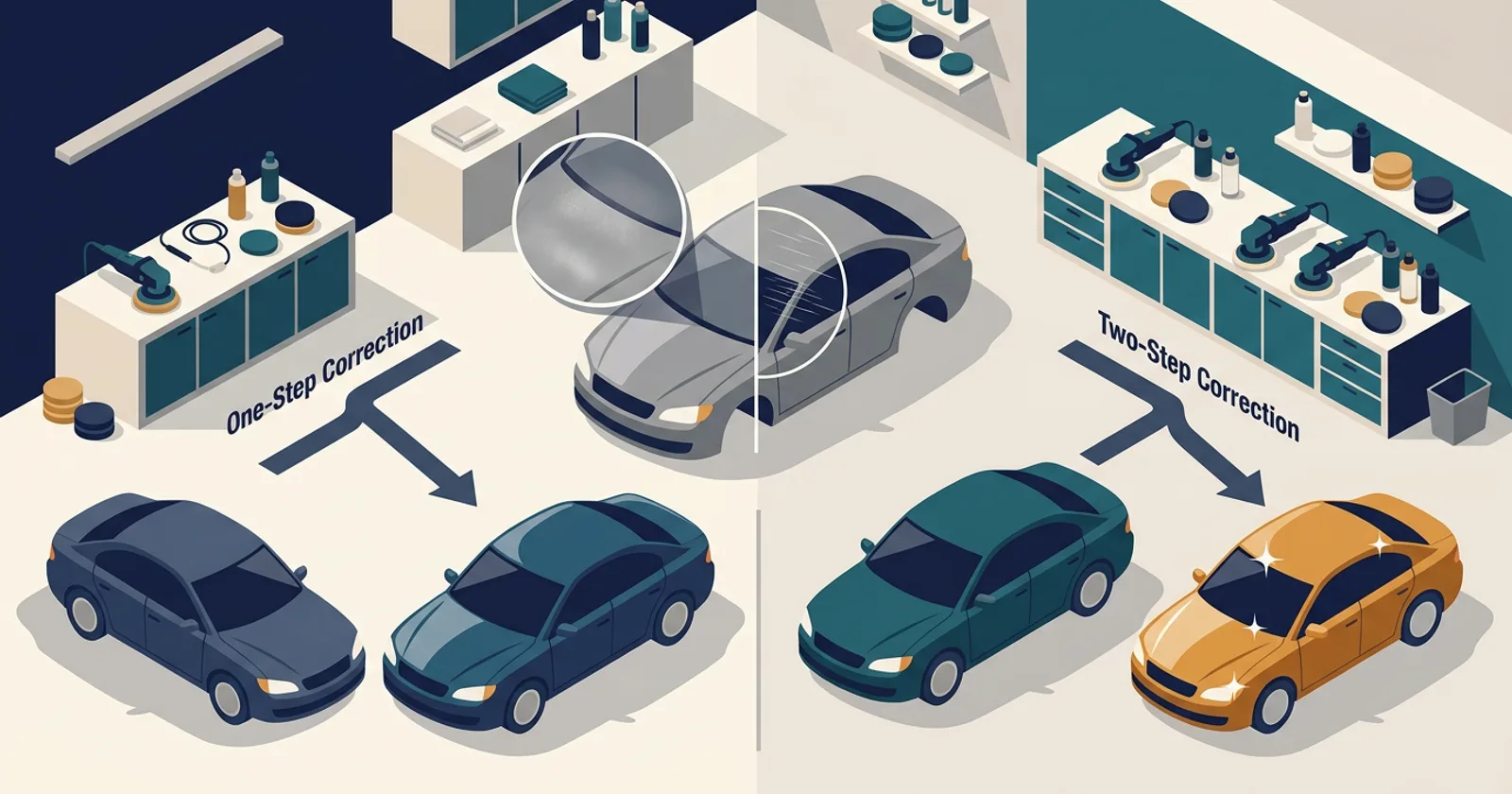
Know what you paid for. One Chicago shop’s lightest correction level says it removes about 60% of defects; its heavier levels remove about 75% and 90%. A light correction isn’t meant to remove every defect.
What a proper finish costs elsewhere
If you end up paying another shop, published correction prices give a sense of scale:
- A Dallas shop lists a Level 1 single-stage polish from $495 and a Level 2 enhancement from $749.
- A Chicago shop lists its correction levels starting at $575, $775 and $925.
Finishing out holograms takes very little paint. The European retailer says an anti-hologram polish removes only 0.5 to 2 micrometres and that clear coat averages 35 to 50 micrometres, so it’s worth asking for a paint-depth reading on a car that’s been polished before. If you’re weighing doing it yourself, see buying a polisher vs paying for correction. New car with marks at delivery? See dealer swirls on a new car.
Sources
Based on 6 sources · How we price
- Detailed Image, Ask a Pro: How are holograms formed: detailedimage.com/Ask-a-Pro/how-are-holograms-formed/amp
- EuroLuxe Detailing, Holograms and buffer trails: signs of bad paint correction (North Houston area): euroluxedetailing.com/blog/holograms-buffer-trails-fix
- Detailing1, Anti-hologram polish (Detailing101 guide): detailing1.de/en/blogs/detailing101/antihologramm-politur-hologrammfrei-finishen
- Simon’s Shine Shop, paint correction (Chicago): simonsshineshop.com/paintwork-correction
- Martin Auto Detailing, paint correction services (Dallas): martinautodetailing.com/collections/paint-correction-services
- Community discussion, r/AutoDetailing (paraphrased; not linked)