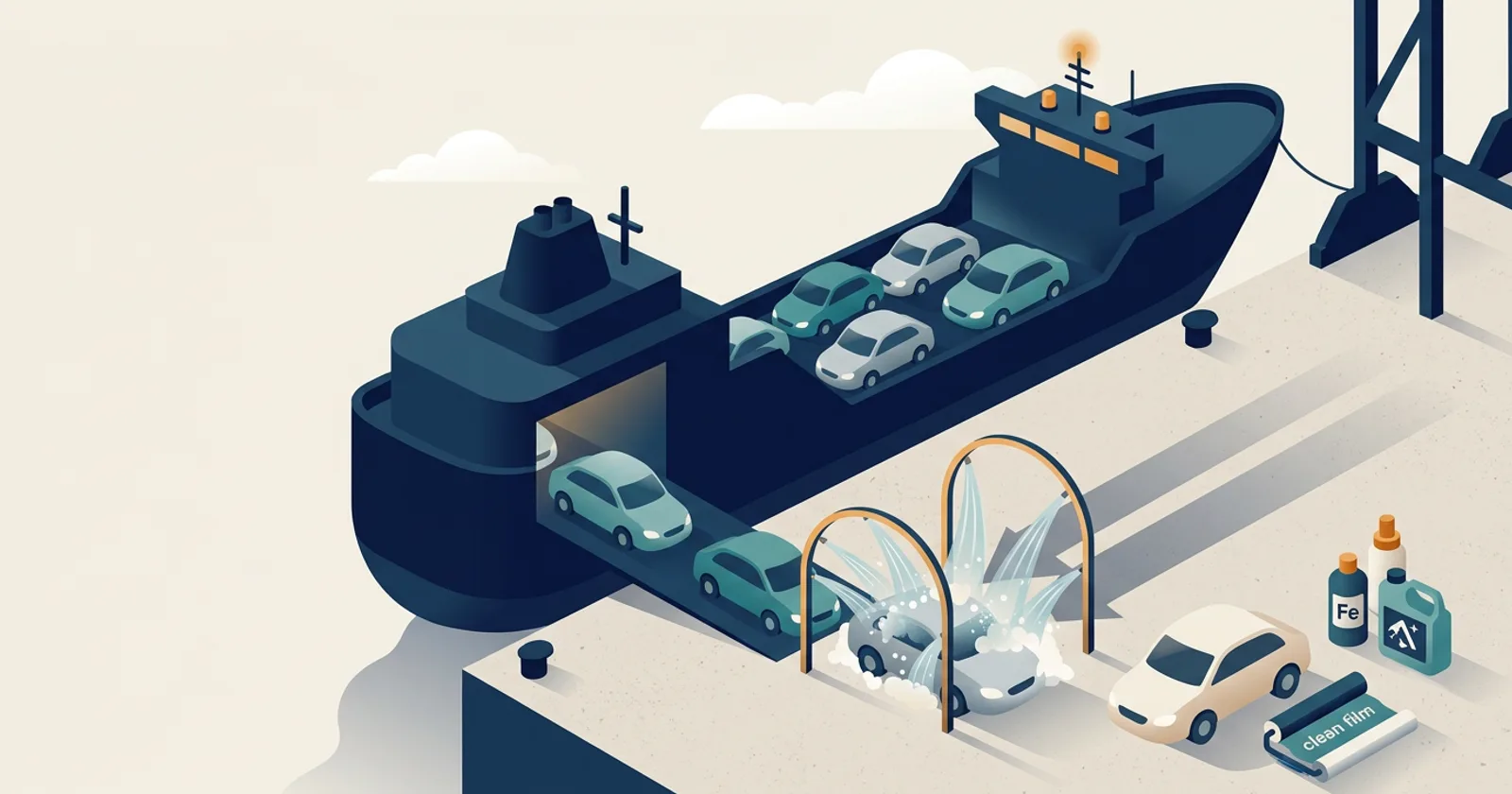
Plenty of cars move through U.S. ports. In 2025 the Port of Baltimore alone handled 728,225 autos and light trucks, second among U.S. ports, the state’s port agency reports. From the port, each car still needs a ride to its dealer.
The question comes up often. On a detailing forum, one buyer whose new car spent about two and a half months at sea asked if it needed iron decon even though it never rode a train. Most replies said to decon; a few said a standard wash is enough. Here’s what the primary sources say.
Where the dirt actually comes from
A vehicle-logistics trade report gives the clearest picture. One carmaker said it covered cars for the ocean leg mainly to avoid airborne contamination on the dockside, not on board. The same report names the risks in port: paint overspray drifting from nearby ship work, and acid rain. On land, “rail dust” is the fine dust shed by railcar brakes, and the report says that if left, it can take the shine off new paint.
| What’s on the car | Where it picks it up | How to spot it | What removes it |
|---|---|---|---|
| Road film and dust | Dock lots, truck ride | Dull, gritty feel | Rinse, then a careful hand wash |
| Iron specks (rail dust, brake dust) | Rail cars, port yards | Iron remover turns purple | Iron remover on cool paint |
| Overspray mist | Ship painting upwind in port | Rough feel after washing | Clay, then a light polish |
| Film or transit-coat glue | Protective film left on too long | Thin lines along old film edges | Wash; adhesive cleaner if stubborn |
| Soil under the car (used imports) | The car’s former life abroad | Mud in wheel wells and frame | Steam-spray or clean before shipping |
Let the dealer remove the film, then stop them
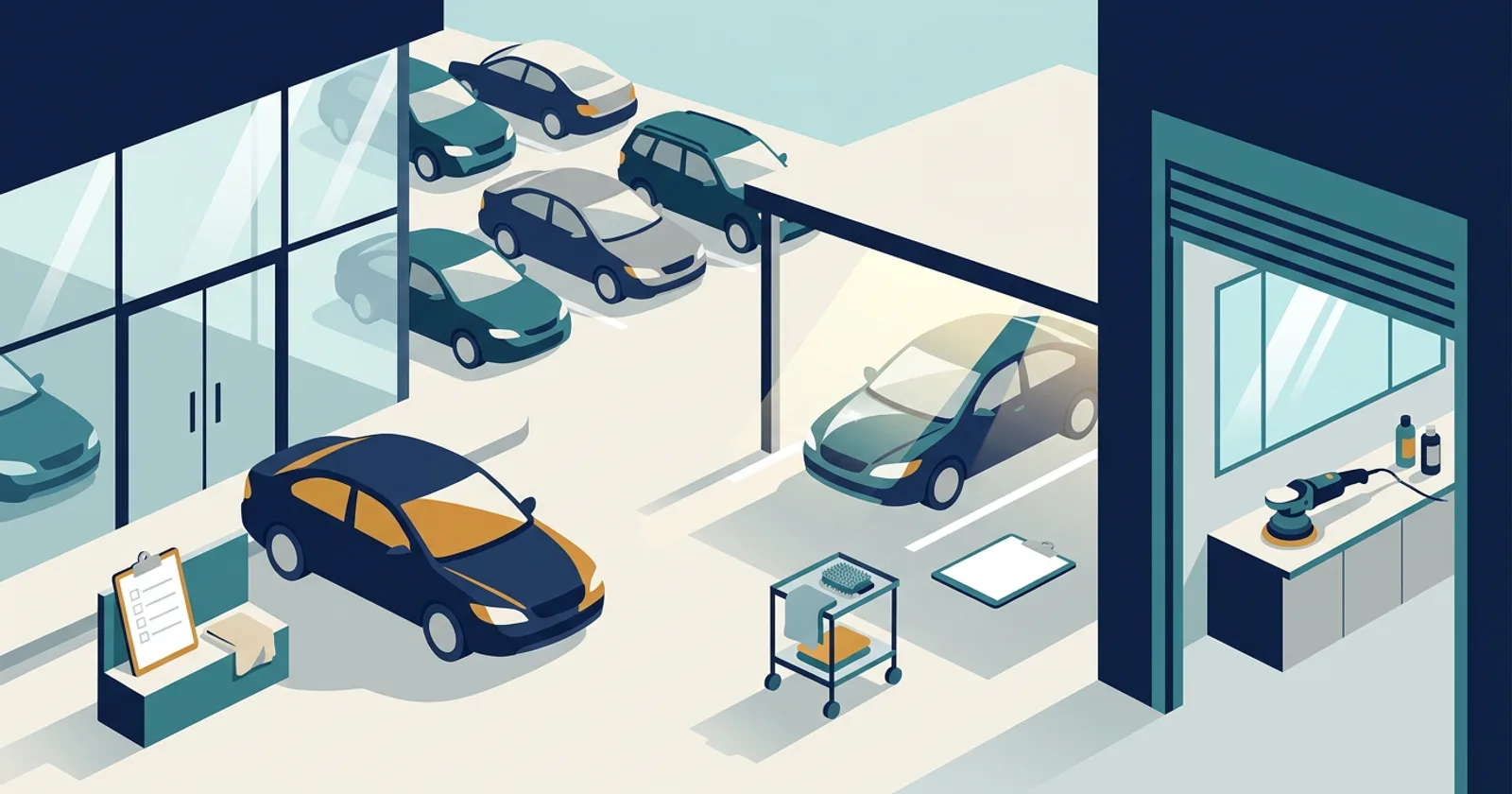
Removing transit film or a peel-off coating is part of the dealer’s pre-delivery prep. One carmaker’s bulletin says its paint guard film protects against acid rain, iron particles, bird droppings and tree sap. It warns that the film can’t stay on bumpers more than three months or on the body more than six months after the car was built, and that leftover glue lines get harder to remove the longer they sit in sun. It tells technicians to rinse the car before peeling, and to cool the panels in shade on days of 90°F or hotter.
Another carmaker uses a liquid-applied transit coating that protects the paint for up to one year. Its bulletin says the coating peels easily at a panel temperature of 60°F to 90°F, never to use hot water on it, and that a standard car wash removes any leftover glue.
So ask for film removal and a rinse, and nothing more. Our guide to keeping the dealer from swirling a new car covers how to put a no-wash request in writing.
Your first wash at home, in order
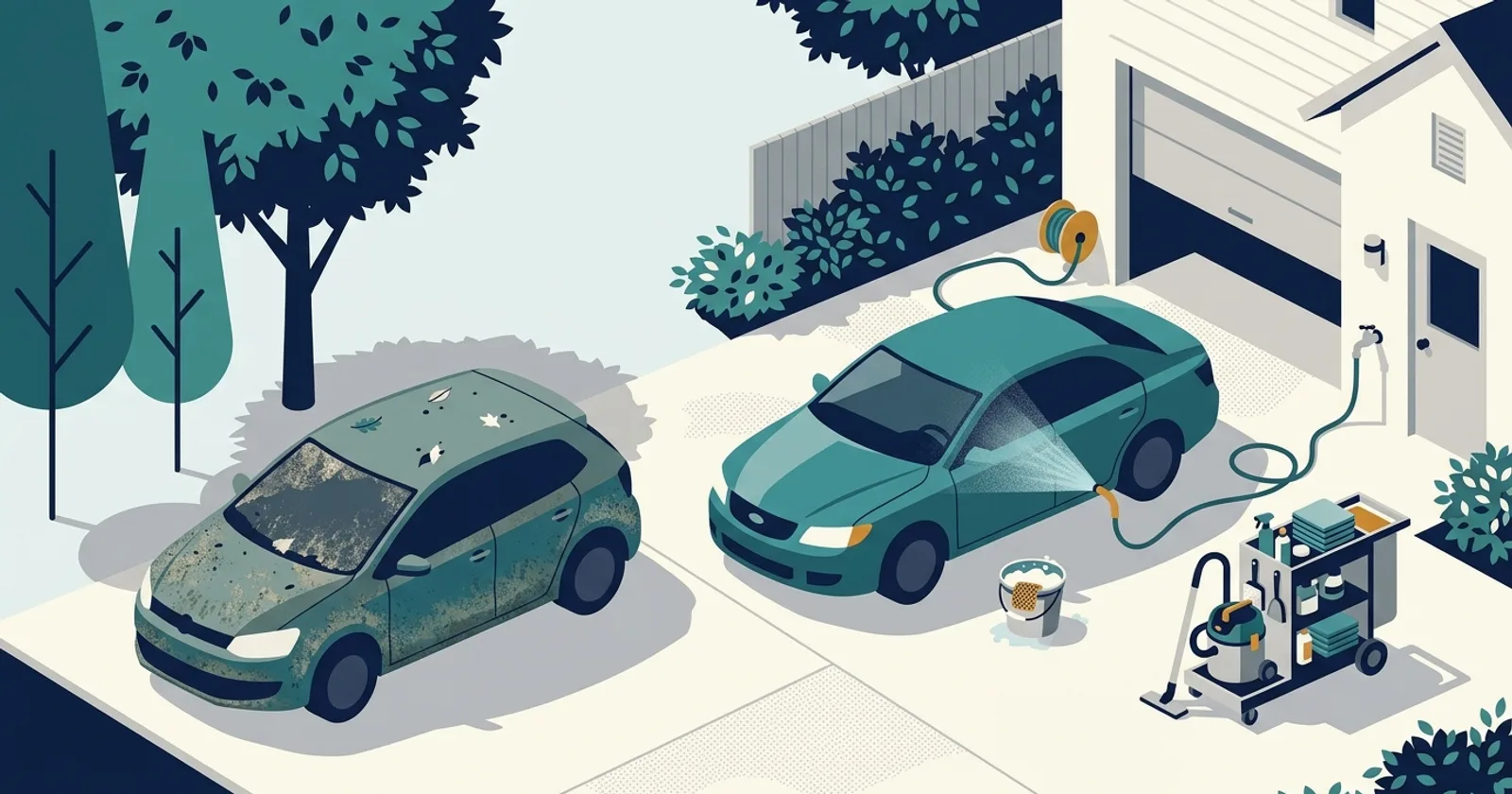
- Rinse everything, including underneath. Start low: wheel wells, rocker panels and the underbody.
- Hand wash with plenty of suds and a clean mitt. No dry wiping.
- Iron remover, on cool paint in the shade. One retailer’s iron remover says to let it dwell 3 to 8 minutes, watch for a purple color where it meets iron, and never let it dry on the surface. That bottle lists at $19.99 for 16 ounces. Follow your own product’s label.
- Feel the paint. If it’s smooth after drying, you’re done with decon.
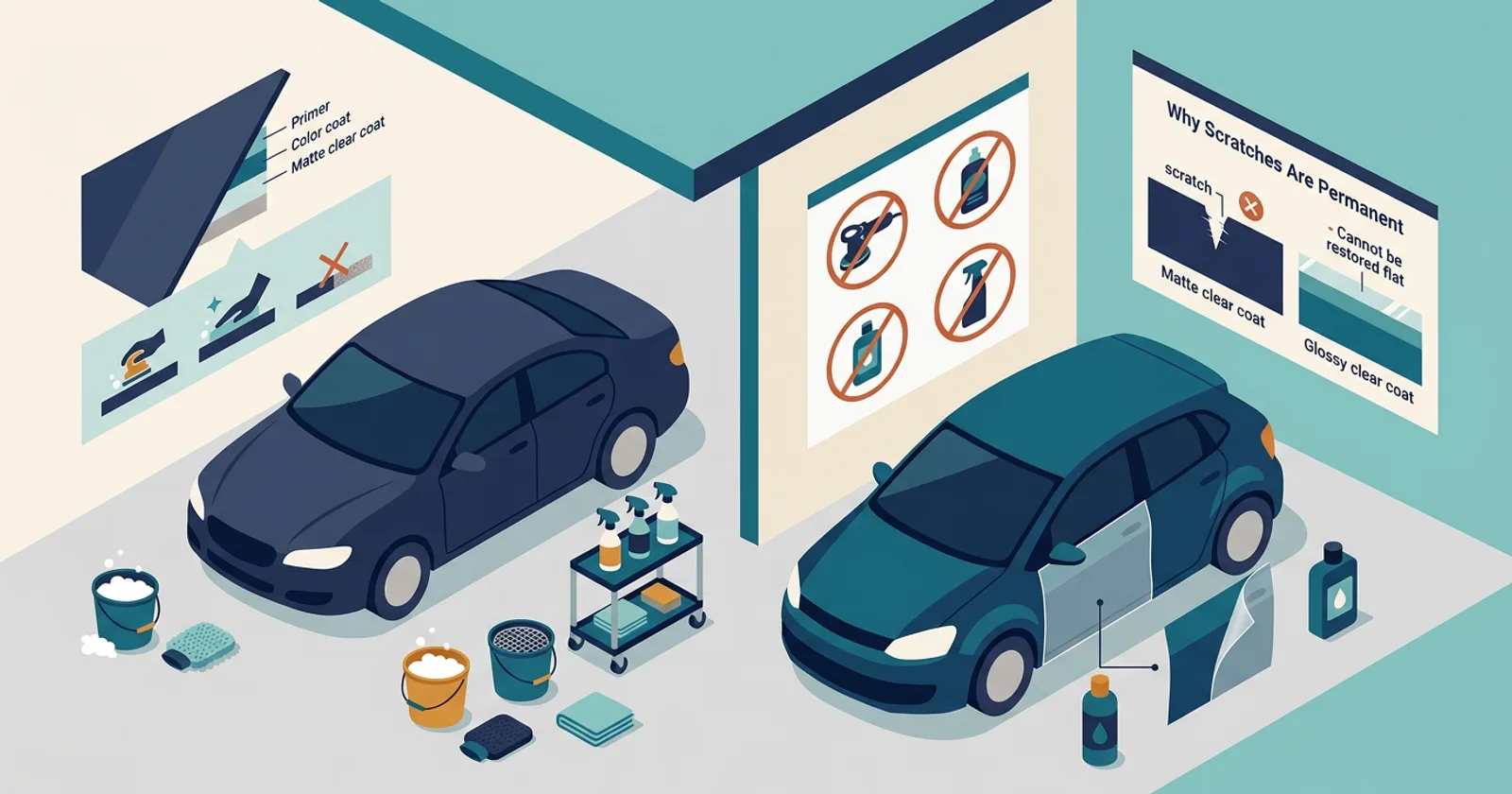
- Clay only if it’s still rough. A detailing retailer’s guide warns that clay will almost always leave at least some marring of its own, so plan a light polish afterward.
- Protect it. A sealant or coating goes on last. See what ceramic coating costs or whether PPF or a coating suits a new car.
If you plan to polish, a paint-depth reading first tells your detailer how much clear coat there is to work with. A car that sat outside all season needs a similar order of steps, laid out in the safe first wash after a season outdoors.
Importing a used car yourself? Soil is the rule
If you’re shipping a used car from abroad, the cleaning starts before it leaves. U.S. Customs and Border Protection says the Department of Agriculture requires the undercarriage of imported cars to be free of foreign soil. It tells owners to have the car steam-sprayed or cleaned thoroughly before shipment.
That’s to keep out plant pests. Federal plant-protection rules count automobiles as a “means of conveyance” that inspectors can hold at the port. Any cleaning or treatment they order is billed to the owner. So clean it before it ships, on your schedule, rather than at the port on theirs.
When to hand it to a detailer
Book a detailer if the remover turns most panels purple, if glue lines won’t wipe off, or if the paint feels rough after washing. Ask in writing whether the price covers an iron decon, clay and a polish, or only a wash. Our guide to finding a reliable mobile detailer lists what to check first. If the work disappoints, see how to get a detail fixed. For how we check our numbers, see our methodology.
Sources
- Maryland Port Administration, 2025 cargo press release (PDF): mpa.maryland.gov/Press%20Releases/Press03242026.pdf
- Automotive Logistics, Perceptions of protection (2013): automotivelogistics.media/vehicle-logistics/perceptions-of-protection/205734
- General Motors service bulletin 17-NA-055, Temporary Paint Guard Film Removal (NHTSA): static.nhtsa.gov/odi/tsbs/2017/MC-10116640-9999.pdf
- Volkswagen technical service bulletin 00-20-04, Liquid Applied Transit Coating Removal (NHTSA): static.nhtsa.gov/odi/tsbs/2023/MC-10240120-0001.pdf
- DIY Detail Iron Remover, Detailed Image product page: detailedimage.com/DIY-Detail-M141/Iron-Remover-P3332/16-oz-S1
- Detailed Image, What Causes Swirl Marks?: detailedimage.com/Ask-a-Pro/what-causes-swirl-marks
- U.S. Customs and Border Protection, Importing a Motor Vehicle: cbp.gov/trade/basic-import-export/importing-car
- eCFR, 7 CFR Part 330 (Federal Plant Pest Regulations): ecfr.gov/current/title-7/subtitle-B/chapter-III/part-330
- Community discussion (detailing forum): reddit.com/r/AutoDetailing/comments/1k9fcq5