Owners in hot states trade stories about the dreaded dash crack. Then the arguing starts. Does a dressing protect the dash, or make it worse? Here’s what the evidence and the makers say.
How hot your dash really gets
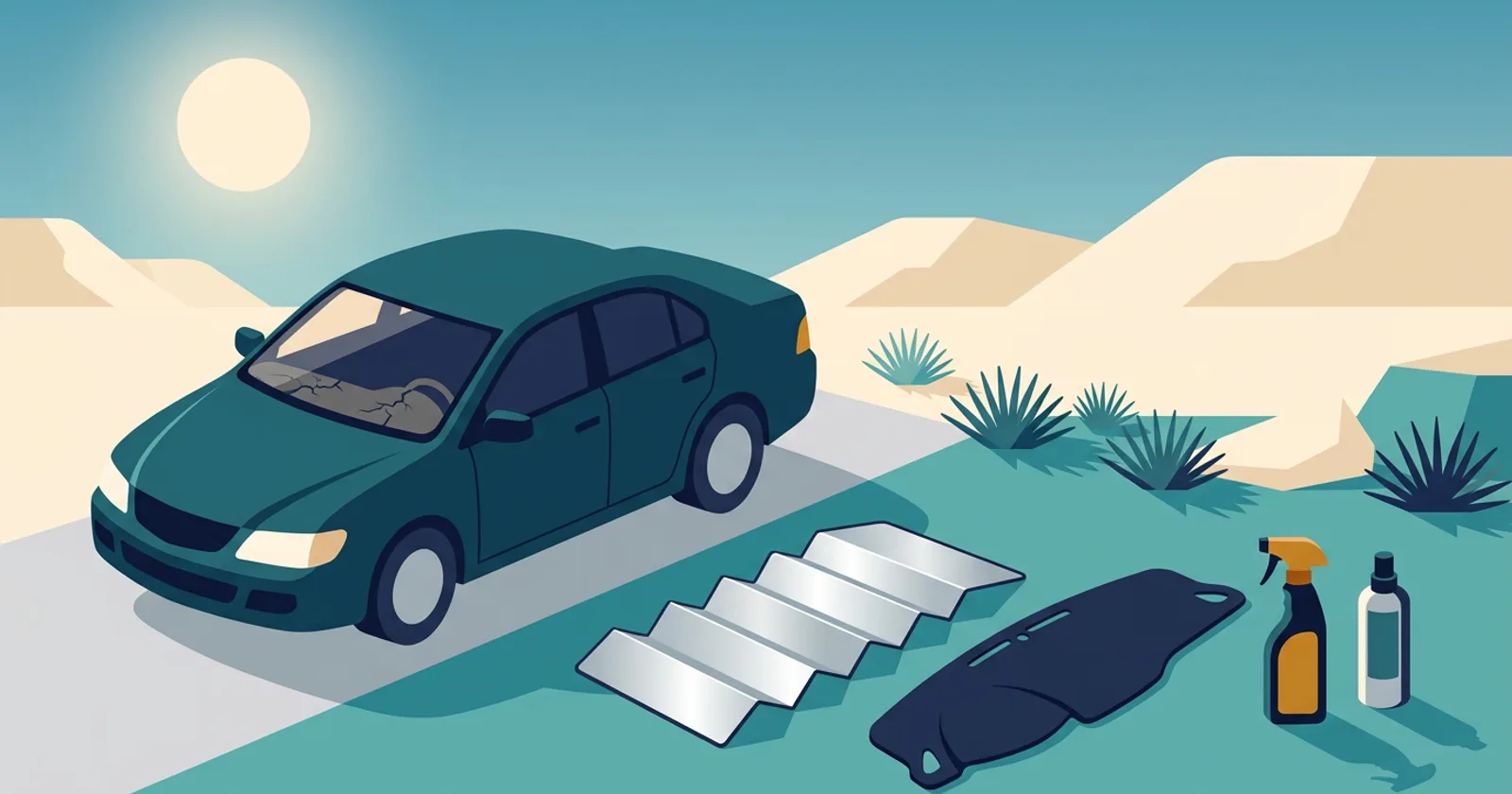
Researchers from Arizona State University and UC San Diego parked cars in sun and shade in Tempe, Arizona. The summer days were in the 100s. After one hour in the sun, the cabin air averaged 116°F and the dashboards averaged 157°F. In the shade, dashboards averaged 118°F.
That’s the gap a sunshade or a shady spot buys you: about 39 degrees on the dash surface.
Phoenix shows how often a dash sits in that kind of heat. The National Weather Service’s normal July high at Sky Harbor is 106.5°F. From 1991 to 2020, Phoenix averaged 111 days a year at 100°F or hotter, and 21 days at 110°F or hotter. In 2024 it hit 110°F or hotter on 70 days, the most on record.
The windshield stops most UV
A small study in a medical journal measured UV-A light in 29 cars. The windshields blocked an average of 96 percent of it. The side windows blocked only 71 percent on average.
So the windshield glass already filters most of the UV your dash gets. It doesn’t stop the sunlight and heat landing on the dash. A sunshade blocks the light itself, so it matters more for the dash than side-window tint.
Side-window film still helps your door panels, seats and arms. One national film maker lists up to 99.9 percent UV protection for its ceramic film line. Interior surfaces can also go shiny from wear, as in a leather steering wheel that turned glossy. Suede-look wheels wear differently, as this guide to reviving a pilled suede wheel explains.
What actually protects a dashboard
| Option | Example product | Maker or seller claim | Example price | Limits |
|---|---|---|---|---|
| Windshield sunshade | Covercraft Premier custom sunshade (sold by RealTruck) | Blocks light and “damaging UV rays”; reduces interior temperature | $109.99 | Only when parked and put up |
| Dash cover | DashMat Suede dash cover (sold by RealTruck) | Protects the dash from UV; reduces windshield glare | $74.99 | Stays on while you drive; vehicle-specific fit |
| Side-window film | 3M Ceramic IR 35 (on auto glass) | 37% light in, 99.8% UV block, 58% total solar energy rejected | Set by the installer | Doesn’t cover the windshield; state tint limits apply |
| UV protectant | 303 Aerospace Protectant | “Powerful UV blockers”; dries to a matte finish | Varies by store | Not for gauge panels or clear plastics, per maker; no heat protection |
Prices are from the seller’s page on 2026-10-08 and vary by vehicle.
Sunshade first
If you park outside, a sunshade does the most for the dash. It blocks the direct sun that heats the surface. It only works when it’s up, so keep it where you’ll grab it.
A dash cover for the hard cases
A dash cover helps if your car sits outside all day and you can’t always put up a shade. One seller says it also cuts windshield glare.
Film, within the law
Arizona allows film on the front side windows with a light transmission of 33 percent, plus or minus 3 percent. On the windshield, the law allows transparent film only on the topmost strip. Check your own state’s rules before you book an installer.
Protectant as a top-up, not armor
A protectant maker says its product’s UV blockers help prevent fading and cracking. That’s a claim on the label, not a lab result we could find. It does nothing about a 157°F surface.
What your owner’s manual says
Read the care section before anyone puts a product on your dash. Here’s what two automakers say:
- Keep it plain. One automaker’s manual says to clean interior surfaces with warm water and a mild non-detergent cleaner. Test any cleaner on a hidden spot first.
- Watch sunscreen and air freshener. The same manual warns that sun cream, hand cleaner and air freshener may damage or discolor interior parts. Wipe spills right away.
- Don’t make it shiny. Another automaker’s manual says not to polish the instrument panel. A polished surface reflects and may interfere with the driver’s view.
That glare problem is real. On one older owners’ forum, a member said a glossy dressing from a detail left the dash throwing glare onto the windshield in the sun.
What to ask your detailer
If you’re paying for an interior detail, ask what goes on the dash. “Matte, non-greasy, and no polish on the dash” is a fair request. Our guide to interior detail price tiers shows that even budget packages often include a dressing. So say it before the job starts. How the two kinds of product compare is laid out in matte protectants versus greasy dressings.
Having that conversation is one of the steps to the best result when booking a detail. And if you’re still choosing someone, see how to find a reliable mobile detailer.
One more note: window film for glass isn’t the same as the paint film in our PPF vs ceramic coating guide. Don’t let a shop bundle them as one product.
Sources
Based on 13 sources · How we price
Checked 2026-10-08. How we check facts: methodology.
- ASU News, Study: Hot cars can hit deadly temperatures in as little as one hour: news.asu.edu/20180516-discoveries-asu-study-hot-cars-can-hit-deadly-temperatures-within-one-hour
- UC San Diego Scripps Institution of Oceanography, research highlight on the same study: scripps.ucsd.edu/news/research-highlight-hot-cars-can-hit-life-threatening-levels-approximately-one-hour
- NWS Phoenix, July 2025 Climate Summary (1991-2020 normals): weather.gov/media/psr/Climate/July2025Climate.pdf
- NWS Phoenix, Extreme Temperature Facts: weather.gov/psr/ExtremeTemps
- PubMed, JAMA Ophthalmology (2016), UV-A protection in automobile windshields and side windows: pubmed.ncbi.nlm.nih.gov/27258091
- Arizona Revised Statutes 28-959.01, Materials on windows or windshield: azleg.gov/ars/28/00959-01.htm
- Kia owner’s manual, Interior care: ownersmanual.kia.com/full_webhelp/MV1A/2026/en_US/topics/chapter9_15_2.html
- Land Rover owner’s handbook, Vehicle cleaning: topix.landrover.jlrext.com/topix/service/procedure/217421/PDF/4d958a13-1aa2-4000-8f2b-491b9f5407a1/en_GB?page=1
- 3M Automotive Window Film, Ceramic IR Series Technical Data Sheet: multimedia.3m.com/mws/media/1919598O/3m-automotive-window-film-ceramic-ir-series-tech-data-sheet.pdf
- RealTruck, Covercraft Premier Ford Custom Windshield Sun Shade: realtruck.com/p/covercraft-premier-ford-custom-windshield-sun-shade
- RealTruck, DashMat Suede Dash Covers: realtruck.com/p/dashmat-suede-dash-covers
- Gold Eagle, 303 Aerospace Protectant: goldeagle.com/product/303-aerospace-protectant
- Community discussion (owners’ forum, older thread): peachparts.com/shopforum/detailing-interior/214104-armor-all-alternatives.html