Why a coated car still spots
Water spots are what’s left when water dries. The U.S. Geological Survey describes water hardness as the amount of dissolved calcium and magnesium in water. When a drop evaporates, those minerals stay behind.
A coating is slick, so water beads up. But a bead that sits still in the sun dries in place and leaves a small ring of minerals. One coating maker’s guide warns that spots left alone can bond to the surface and lead to etching.
In one community discussion, an owner whose car was coated about six months earlier washed it weekly and still found baked-in mineral spots that three spot removers did not lift.
Where the minerals come from
One coating maker names three usual sources: lawn sprinklers, tap or well rinse water, and rain that picks up air pollution. Its risk chart puts spots that are left on the paint repeatedly, in high heat and in the sun, in the highest-risk group.
How hard your water is matters too. Under USGS guidelines, water at 0 to 60 mg/L (as calcium carbonate) is soft, 61 to 120 is moderately hard, 121 to 180 is hard, and anything over 180 is very hard.
Las Vegas shows the far end of that scale. The Las Vegas Valley Water District lists its water at about 280 parts per million (16 grains per gallon) and calls it “very hard.” That is well past the USGS cutoff of 180 mg/L. For your own area, the USGS says your local water utility is the place to ask.
First, figure out which kind of spot you have
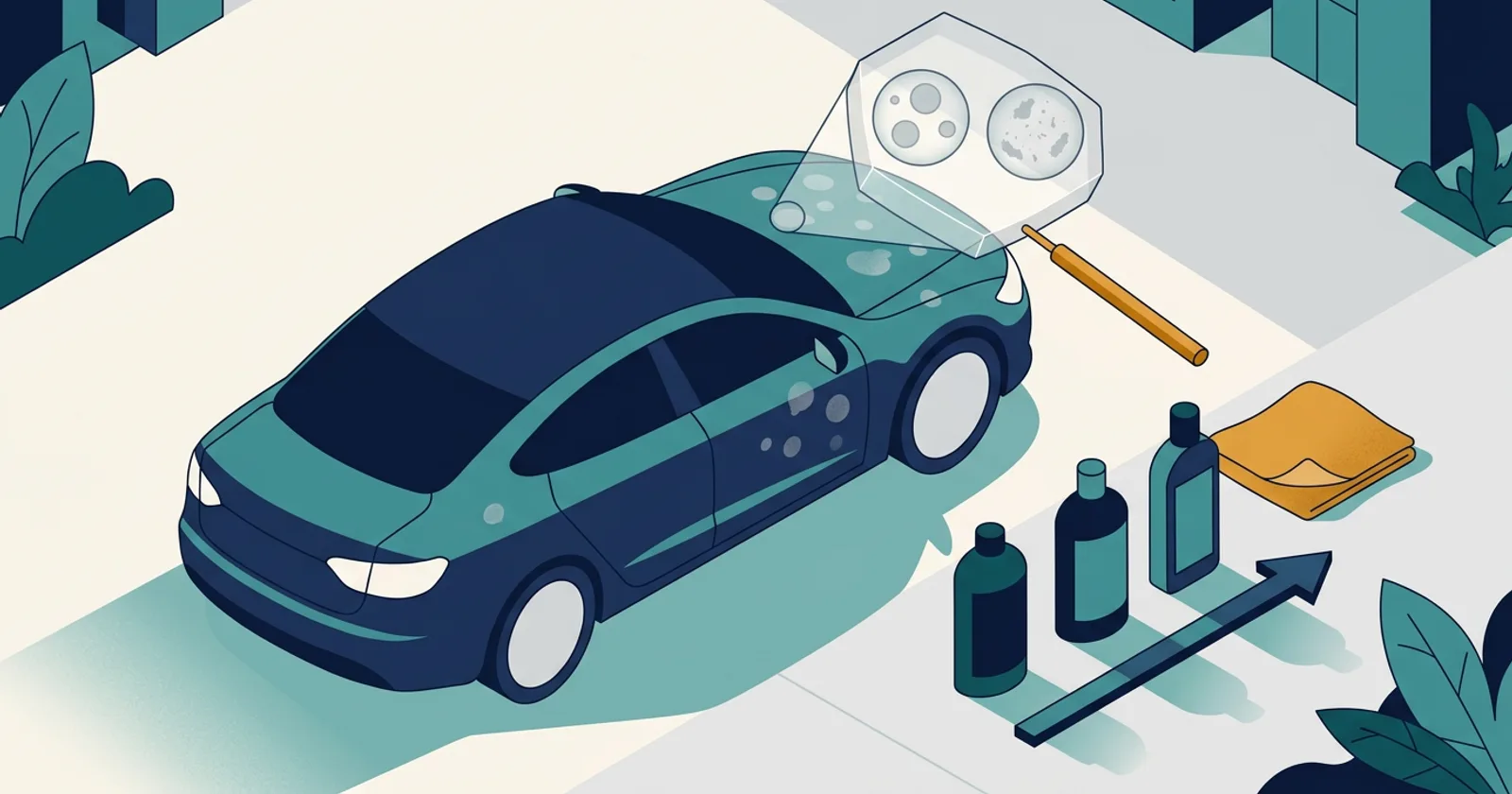
The fix depends on where the spot sits. One coating maker’s rule of thumb: if a spot is still there after washing and a chemical remover, it has likely etched into the surface and needs polishing.
| Spot type | What it looks like | What removes it | Cost to your coating |
|---|---|---|---|
| Fresh residue | Light film, appeared recently | Wash or quick detail spray | None |
| Mineral deposit | Chalky, white, sits on top | Water spot remover (mild acid) | Little, if used as directed |
| Bonded stain or etch | Faint ring, smooth or sunken | Clay, then machine polish | Removes some coating, maybe clear coat |
Based on two coating makers’ water spot guides (see Sources).
The removal ladder: gentlest step first
Coating makers agree on one rule: start with the least aggressive method. Clear coat is thin, and every polish takes some away.
- Wash and dry. Wash in the shade with a pH-neutral car shampoo, then dry with a clean microfiber towel.
- Try a quick detail spray. Wipe gently. One coating maker warns that heavy rubbing can leave a shiny patch that won’t come out.
- Use a water spot remover. These are mildly acidic and break down the minerals. Work a small area, follow the label, and rinse well.
- Try diluted vinegar, carefully. Two coating makers list a 1:1 mix of white vinegar and distilled water. One says to let it sit for a minute, then wipe, and warns that vinegar can shorten the coating’s life.
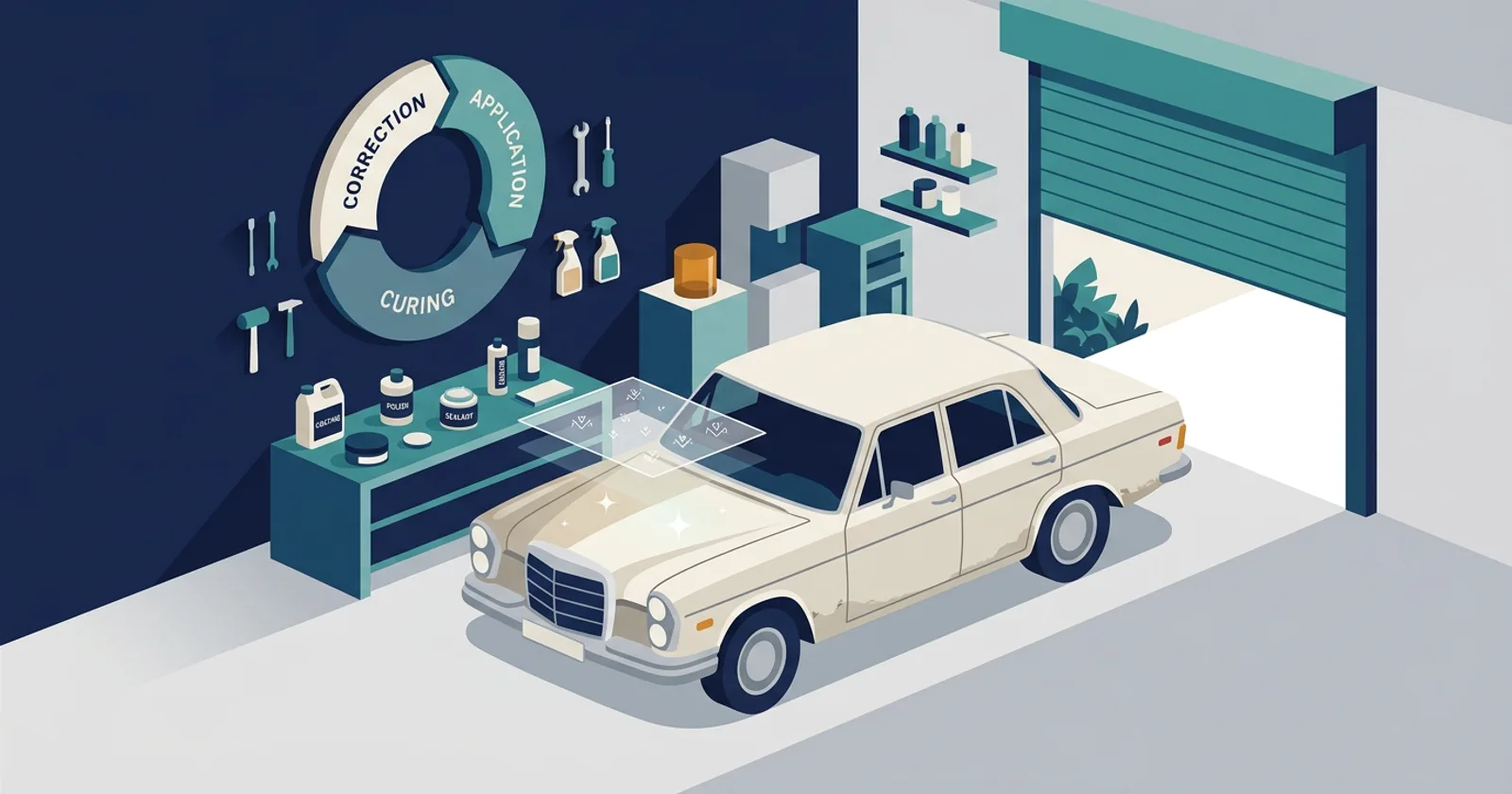
- Clay and polish. If the spot survives all that, it’s likely etched. One coating maker’s steps: clay the area, then use a random orbital polisher, starting with the softest pad and mildest polish.
- Put protection back. Polishing removes some coating. Coating makers say to reapply a protective product afterward.
Skip the baking soda paste you may see online. One coating maker notes it can abrade the surface. When freezing weather rules out a hose, see washing in winter without outdoor water.
In another community discussion, a car parked on the street and hit by sprinklers and sun for months still showed spots after a hired detailer tried a heavy compound. Deep etching may never fully come out, and pushing harder eats into the clear coat. Electric car owners can find wash steps in our guide to washing an EV.
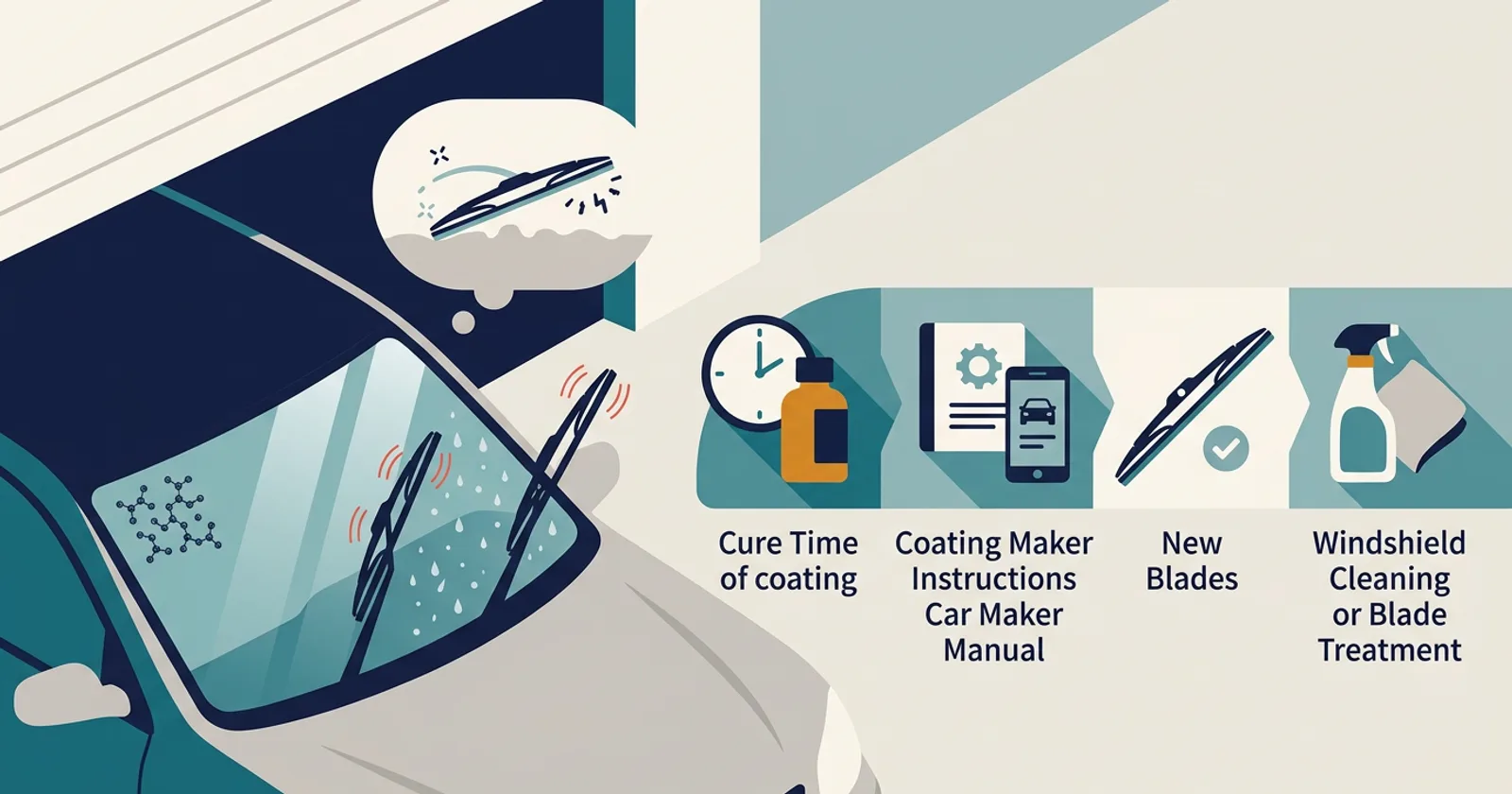
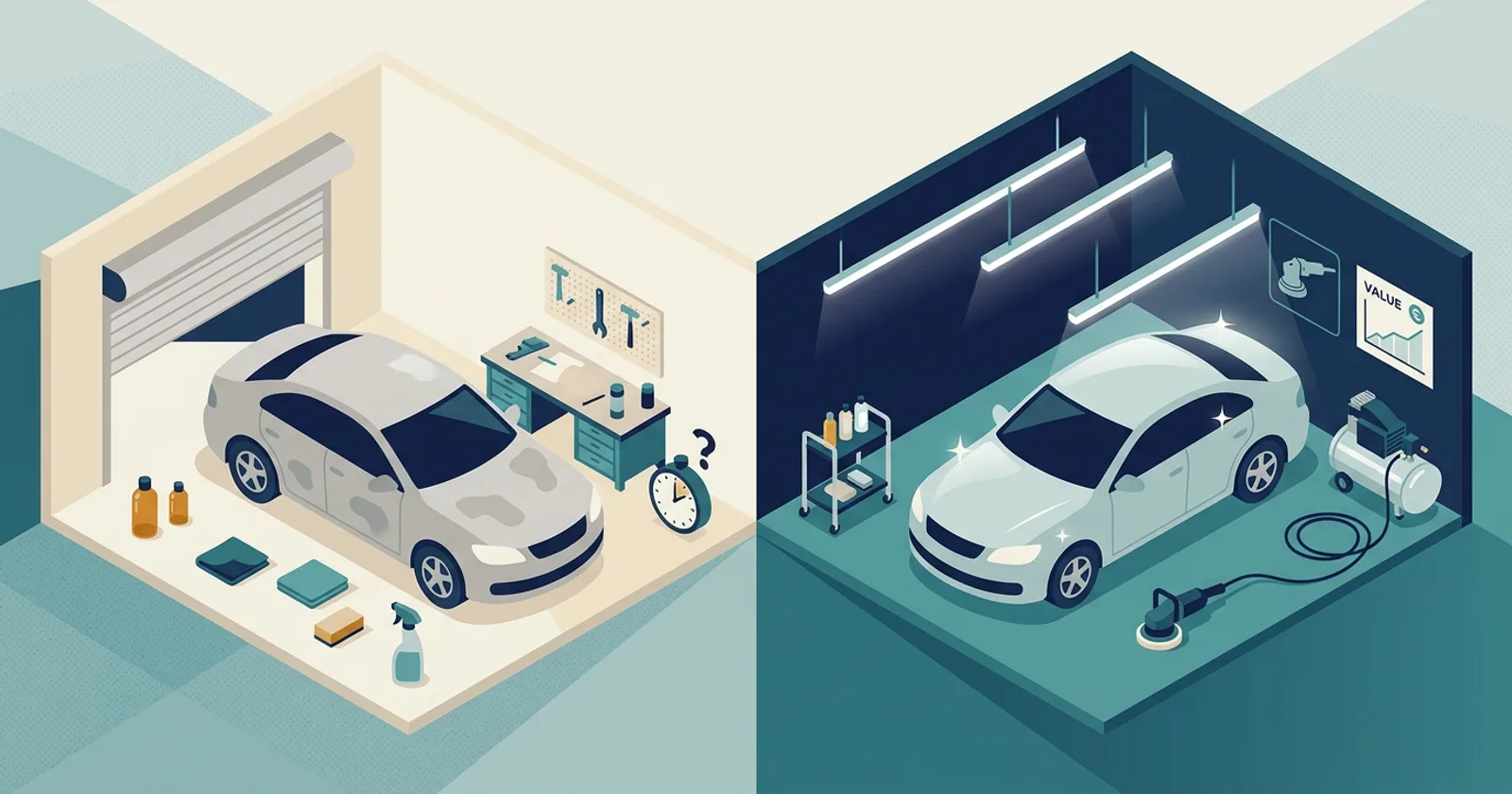
Before anyone polishes, ask your installer how it affects your coating warranty. Our list of booking mistakes covers warranty maintenance terms. If you need a pro, use our guide to finding a reliable mobile detailer. A coated windshield has its own quirk, covered in wiper chatter on coated glass.
How to keep spots from coming back
- Dry the car after every wash and after rain. One coating maker says to always dry the car with a microfiber towel after washing or rain.
- Wash in the shade. A hot panel dries water before you can towel it off.
- Park away from sprinklers, or in shade. One coating maker says shade lowers the chance of spots from rain or sprinklers.
- Use a quick detailer as a drying aid. One coating maker suggests it if you don’t have filtered water.
- Deal with spots early. The longer they sit in sun and heat, the more likely they are to etch.
If spots have already worn a coating down, a recoat is the last step. Our ceramic coating cost guide shows what 1-, 3- and 5-year tiers cost. See how we research our articles.
Sources
- U.S. Geological Survey, Hardness of Water: usgs.gov/special-topics/water-science-school/science/hardness-water
- Las Vegas Valley Water District, Water quality FAQs: lvvwd.com/water-quality/facts/index.html
- Dr. Beasley’s, How Should I Remove Water Spots From My Car?: drbeasleys.com/how-should-i-remove-water-spots-from-my-car-diy-decision-guide
- Dr. Beasley’s, The Best Ways To Remove Water Spots: drbeasleys.com/blog/2019/03/01/how-to-remove-water-spots-on-car
- IGL Coatings, How to Remove Water Spots on Paint: blog.iglcoatings.com/how-to-remove-water-spots-on-paint-the-ultimate-ceramic-coating-maintenance-guide-2024
- IGL Coatings, Ceramic Coating Aftercare guide: blog.iglcoatings.com/2024-guide-maintanance-ceramic-coating
- Community discussion, r/AutoDetailing, “Help: Water spots on ceramic coating”: reddit.com/r/AutoDetailing/comments/1wl2wzd
- Community discussion, r/AutoDetailing, “Extreme water spot removal?”: reddit.com/r/AutoDetailing/comments/1v3hswe