This is the detailer’s side of the problem. Nothing here is legal or banking advice. For your own situation, ask your bank.
The lead that started this
In a detailing community discussion, a mobile detailer described a lead. The person wanted a full detail, would pay by check, and lived out of town. Should they just pass? Dozens of replies came back, and many said the same thing: scam.
Some described where it goes next. An accountant “accidentally” writes the check for too much, then asks you to send the extra back. A few detailers said they do take checks, but face to face from older regulars they know.
The replies were right, and the pattern is old. The Florida Attorney General’s office describes the same play aimed at people selling cars. A thief “pretends to be an interested buyer from out of town”. They send a cashier’s check, money order or personal check for more than the price. Swap “car for sale” for “detail booked” and it’s the same scam.
How the overpayment scam works
The FTC’s fake-check guide lays out the steps. Someone you don’t know asks you to deposit a check, usually for more than they owe. Then they ask you to send part of it back, to them or someone else. They have a good story about why.
For a detailer, the story might sound like one of these, both raised in that discussion:
- The check covers the detail plus a “driver” who will drop the car off, and you’re asked to pay that person.
- An accountant wrote it for the wrong amount, so please refund the extra.
The FTC lists a car-wrap version too: deposit a check, then pay the “decal installers.” The installers aren’t real.
The FBI’s Internet Crime Complaint Center (IC3) tracks “Overpayment” as its own crime type. Its 2025 annual report logged 2,194 overpayment complaints with about $22.9 million in reported losses.
Money in your account isn’t proof
This is the part that catches honest people. The FTC says banks must make deposited money available quickly by law. Seeing it in your account doesn’t mean the check is good. Fake checks can fool bank employees. Some are real checks drawn on a stolen identity’s account.
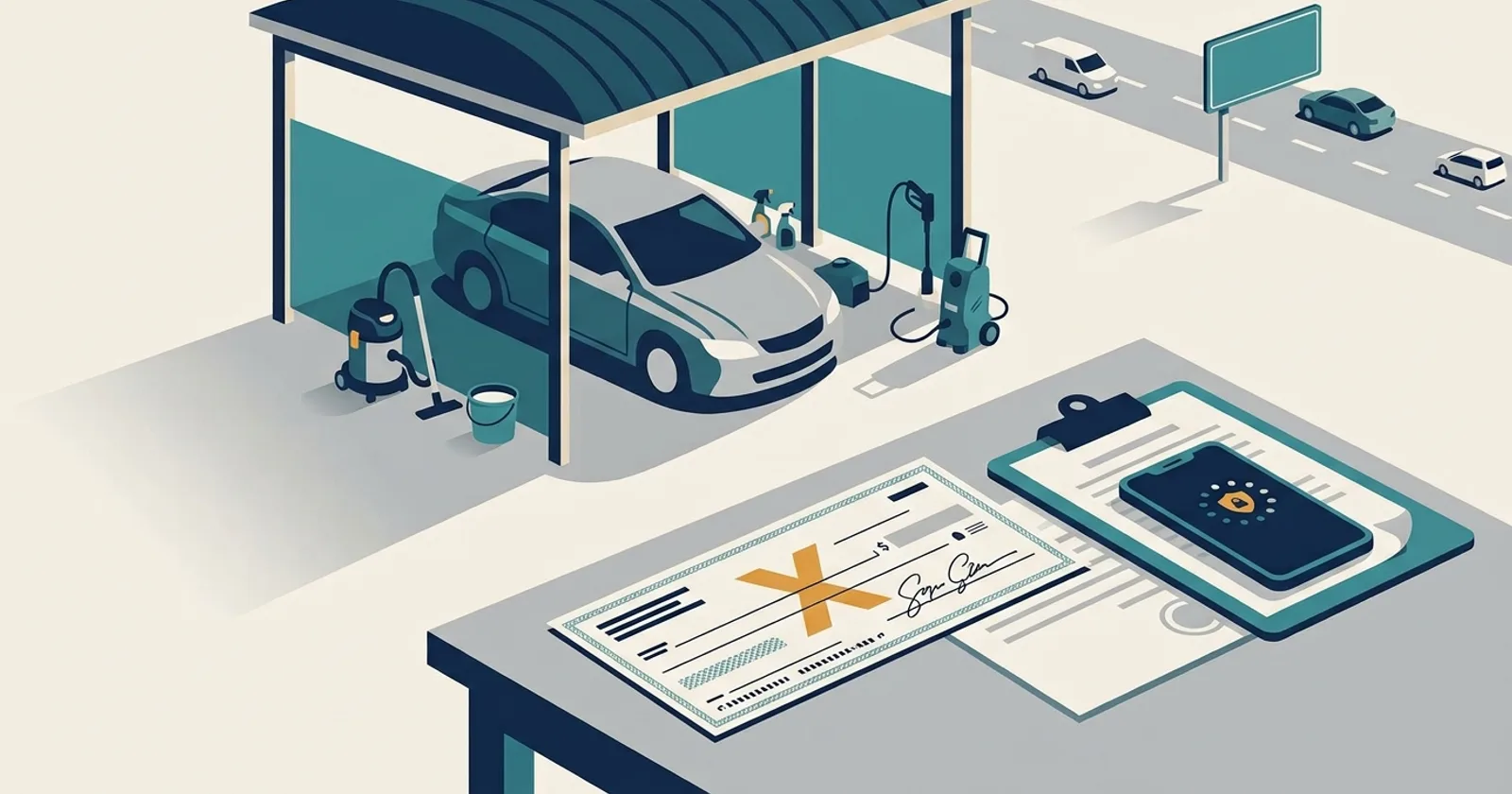
It can take weeks for the bank to find out. By then, the money you sent is gone, and you must pay the bank back. So the danger isn’t the detail you did for free. It’s the “refund” you sent from your own money.
Red flags and what to do
| What the lead does | What official guidance says | Your move |
|---|---|---|
| Says they’re out of town and can’t meet | Florida AG: confirm the buyer’s name, address and phone yourself | Ask for a call and confirm who they are before booking |
| Insists on a check, especially a cashier’s check or money order | FTC: fake checks can look real, even to bank staff | Offer your normal payment options; take a deposit at booking |
| Sends more than your quote | FTC: don’t accept a check for more than the price | Don’t deposit it. Send it back or decline the job |
| Asks you to refund the extra or pay a “driver” | IC3: overpayment means being told to send part of a payment on | Never send money from a check you just deposited |
| Wants a wire, gift cards or crypto | FTC: once sent, getting it back is almost impossible | Stop and report it |
| Pushes you to act fast | Florida AG: resist any pressure to “act now” | A real customer can wait for your schedule |
How to take deposits safely
The simplest protection is a deposit taken through your booking system at booking. It’s for your price, not a penny more. It comes through the same payment tools as every other job. Our guide to booking software for a one-van detailer covers which plans handle deposits and cards on file.
Card deposits carry a different risk, because a customer can dispute the charge later. That’s a paperwork fight you can win. Our chargeback guide shows what to keep. It’s a far smaller problem than refunding a stranger out of your own account.
If you do take a check, the Florida AG’s advice for sellers carries over:
- Do the work after the check has cleared the issuing bank, not just after it shows in your balance.
- Call the issuing bank yourself to ask whether the check is valid. Find the number on your own, not from the person who gave you the check.
- Prefer a check on a local bank you can visit.
Put your payment terms in your quote so nobody is surprised. Our pricing guide shows how to set up a clear menu. How we check every claim on this site: methodology.
If you already deposited it
Don’t send anything back. Talk to your bank about the check right away. If you already sent money, contact the company you used at once and ask for a reversal, the FTC says. That means the wire service, gift card issuer or money order issuer. Then report it to the FTC, the U.S. Postal Inspection Service and your state attorney general. Florida’s Attorney General also runs a fraud hotline for victims.
Sources
Based on 3 sources · How we price
Checked 2026-10-09. The community discussion is paraphrased for the question only and is not linked here.
- Federal Trade Commission, How To Spot, Avoid, and Report Fake Check Scams (June 2025; Internet Archive copy, captured 2026-09-26): web.archive.org/web/20260926201520/https://consumer.ftc.gov/articles/how-spot-avoid-and-report-fake-check-scams
- Federal Bureau of Investigation, Internet Crime Complaint Center, 2025 IC3 Annual Report (PDF): ic3.gov/AnnualReport/Reports/2025_IC3Report.pdf
- Florida Office of the Attorney General, How to Protect Yourself: Overpayment Scams: myfloridalegal.com/consumer-protection/how-to-protect-yourself-overpayment-scams