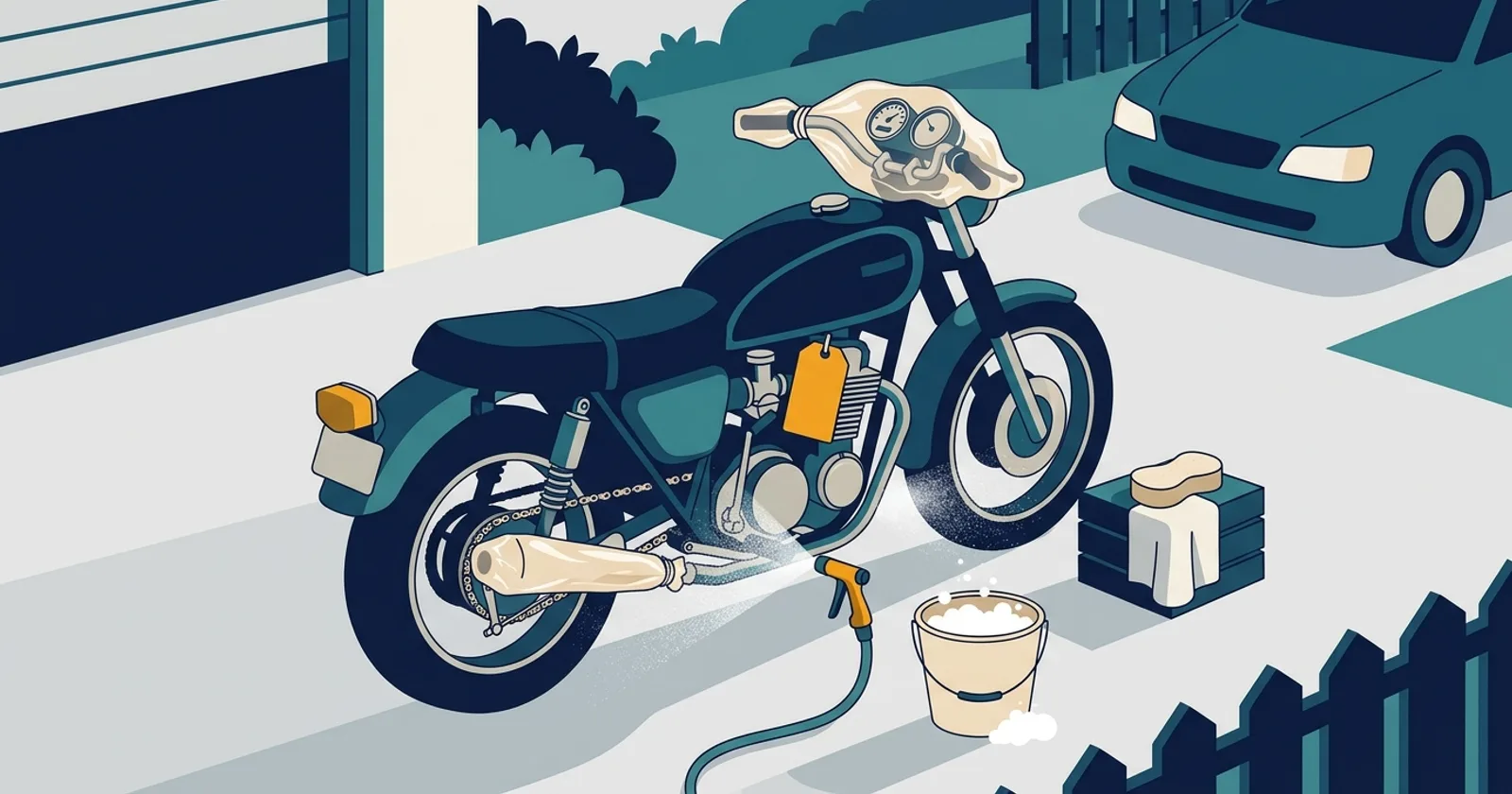
Salt left sitting on a damp bike is what does the damage. This guide covers salt and corrosion only. For the wash itself, see our guide to washing a motorcycle without soaking the electrics. It covers what to cover, why to skip the pressure wand and how to dry the brakes.
What riders keep asking
The same question comes up in motorcycle forum threads from the last two winters. I ride all winter, so how do I stop salt from eating the bike? One rider said they hose the bike down daily while the roads are salty. Another said they coat the bike in a protectant at the start of winter and don’t wash it until spring. Others said self-serve wash bays barely shift the grime, or that their outdoor hose freezes solid.
Those are two different strategies, and the makers’ guidance helps you pick.
Why salt hits bikes harder than cars
On a motorcycle, almost everything is out in the spray. One maker’s care page says winter road salt can cause corrosion. It adds that aluminium parts may corrode from contact with dirt, mud or road salt. Another maker calls salt mixed with wet weather “an extremely corrosive combination”.
What tends to suffer first:
- Fasteners and brackets. A protectant maker’s winter guide says to dry bolts, brackets and welds after rinsing.
- The chain. The same guide says salty road spray hammers the chain. Clean it, dry it and use a wet-weather lube.
- Bare aluminium. One maker suggests a clear protective spray on unpainted aluminium parts during winter, such as engine and transmission housings.
- Wheels, lower forks and swingarm. The protectant maker lists these as the worst-hit areas, along with spokes, engine cases and exhaust joints.
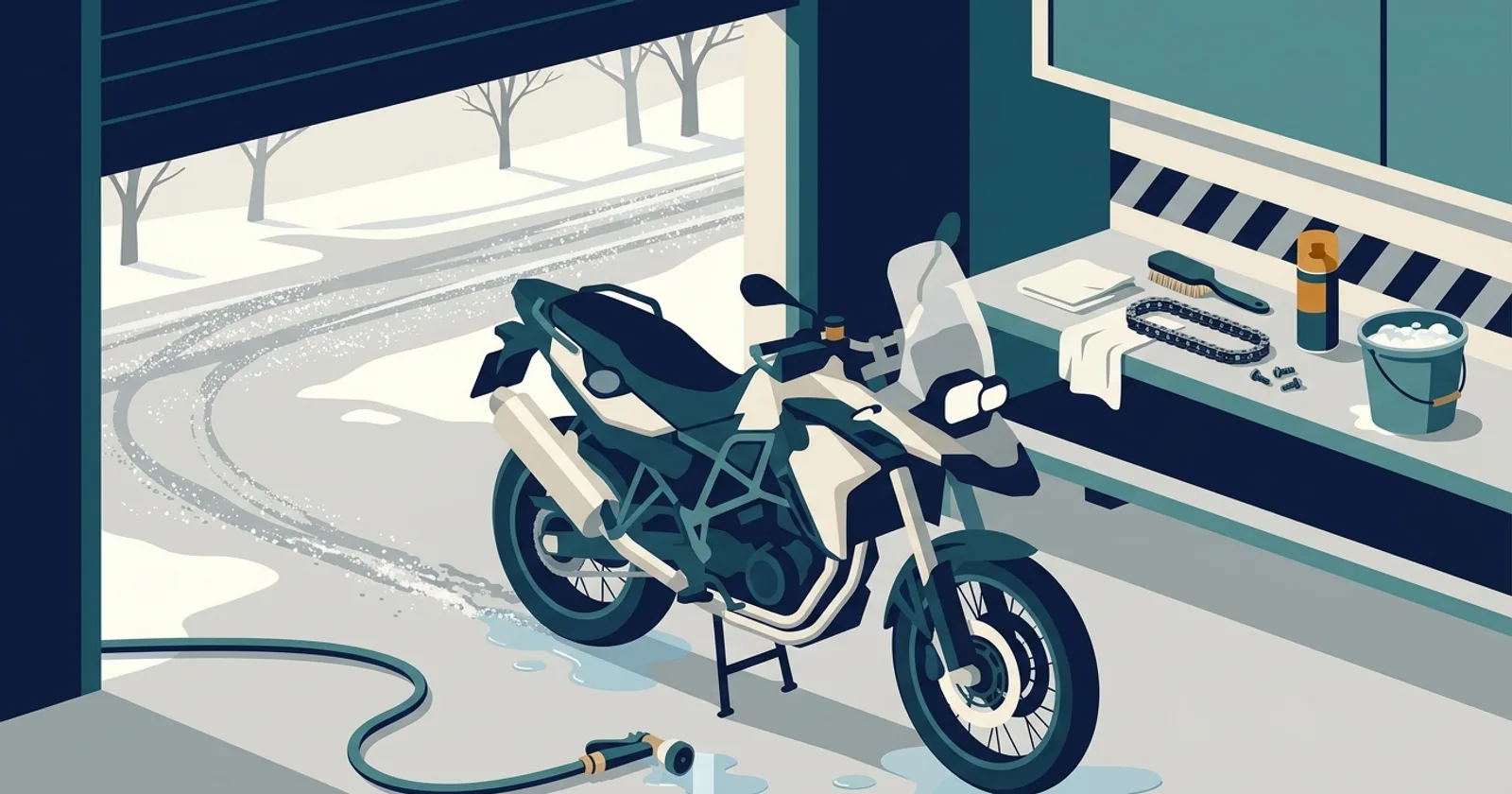
Rinse, dry, protect
1. Rinse soon, with cool water. One maker says to rinse and wash the bike after riding on salted roads. Two makers say to use only cool water, because warm water worsens the effect of the salt. A protectant maker agrees: cold or lukewarm, never hot. Follow the low-pressure method in our motorcycle washing guide.
2. Dry it properly. One maker says to dry the motorcycle, then apply protective sprays or wax to the metal surfaces. The protectant maker says to focus on bolts, brackets and welds.
3. Lube the chain. One maker’s care page says to lubricate the drive chain right after washing and drying. Use the chain lube your owner’s manual names.
4. Add a protectant. Two of the makers below say to keep their sprays off the brakes, and one also names the tires. Read the can before you spray.
| Product (maker) | What the maker says it does | Keep it off | How often |
|---|---|---|---|
| Motorcycle Protectant (Muc-Off) | Light film that repels moisture and road salt | Brakes and tires | Everyday winter use |
| HCB-1 (Muc-Off) | Wax-based barrier for daily riding on heavily salted roads | Not stated in the guide we read | Lasts up to 12 months, per maker |
| FS 365 (Scottoiler) | Water-based spray that builds a barrier over time | Brake discs and calipers (wash off with water if hit) | After every ride |
| Specialist Corrosion Inhibitor (WD-40) | Anti-rust spray for metal parts | Prolonged contact with rubber | Up to 1 year outdoors, per maker’s lab test |
These figures come from the makers’ own pages, not our testing. The one-year figure comes from salt-spray and humidity chamber tests. The maker says results may vary.
Coat once or rinse every day?
The two forum strategies map onto the table. The wax-based barrier is the maker’s pick for riding daily on heavily salted roads. The water-based spray goes on after every ride. That suits riders who can rinse at home.
Is your outdoor water off for the winter? Our guide to washing a car when the spigot is off compares rinseless and waterless options. They work on a bike’s painted panels too. The chain and underside still need attention. Car owners facing the same salt can read our piece on rustproofing a new car before its first salt winter.
A winter in Rhode Island
Road salt is not a minor thing for a state road crew. In a 2020 release, the Rhode Island Department of Transportation said it had 60,000 tons of salt ready across 20 salt sheds and stockpiles. It said it responds to an average of 20 to 30 winter storms a year. It also uses brine trucks to pre-treat roads.
Hiring a detailer for a winter bike
If you’d rather pay someone, ask the detailer to:
- Rinse with cool, low-pressure water and dry the fasteners and chain.
- Apply a protectant you choose, keeping it off the brakes and tires.
- Leave the chain lubed, or tell you that’s your job.
Our guide to finding a reliable mobile detailer helps you vet them. This isn’t riding-safety or warranty advice. Check your owner’s manual for your model’s rules. For what a hired bike detail costs, see what a $150 versus $350 motorcycle detail includes.
Sources
Based on 6 sources · How we price
Checked 2026-10-09. How we check facts: methodology.
- Honda UK, Cleaning your Honda (motorcycles): honda.co.uk/motorcycles/my-bike/maintenance/cleaning.html
- Maeving Help Centre, Removing road salt: help.maeving.com/en/removing-road-salt
- Muc-Off, How to Protect Your Motorcycle from Winter Road Salt (2026): muc-off.com/blogs/how-to-hub/how-to-protect-your-motorcycle-from-winter-road-salt
- Scottoiler, FS 365 #LoveYourBike Application Walkthrough (2022): scottoiler.com/blog/2022/02/24/fs-365-loveyourbike-application-walkthrough
- WD-40 Specialist Corrosion Inhibitor product page: wd40.com/products/corrosion-inhibitor
- Rhode Island Department of Transportation, RIDOT Ready for Winter’s Worst (December 4, 2020): ri.gov/press/view/39939