Take Polk County, Iowa. Iowa State University’s extension service lists its average first fall freeze as October 10 and its average last spring freeze as April 22. That can mean more than six months parked for a summer car.
The pre-storage checklist
| Step | Why it matters | Who says so |
|---|---|---|
| Wash and dry the exterior completely | Dirt and moisture sit on the paint all winter | Honda owner’s manual; AAA |
| Wax the paint | Protects the finish while it sits | AAA |
| Wax paint where it meets door seals; silicone on the seals | Keeps doors and trunk from sticking | Honda owner’s manual |
| Clean interior; carpets and mats fully dry | Damp carpet under a cover stays damp | Honda owner’s manual; AAA |
| Remove all food | Food attracts rodents | CDC; King County Public Health |
| Desiccant packs if storage is damp | Helps keep the interior dry | AAA |
| Breathable cover, never plastic sheeting | Nonporous covers trap moisture against the paint | Honda owner’s manual; AAA |
| Block easy rodent entry points | Mice nest in cabins, intakes and air filters | AAA; King County Public Health |
| Write down every step | So you undo them all in spring | AAA |
Wash, dry, then protect
A carmaker’s storage instructions start with washing and drying the exterior completely. Roadside-club advice for storage over 45 days adds a coat of wax. It says the car should be completely dry before it goes into storage.
If the paint is original single-stage, go gently. Our guide to single-stage paint on a classic explains why polishing removes color.
A dry, empty interior
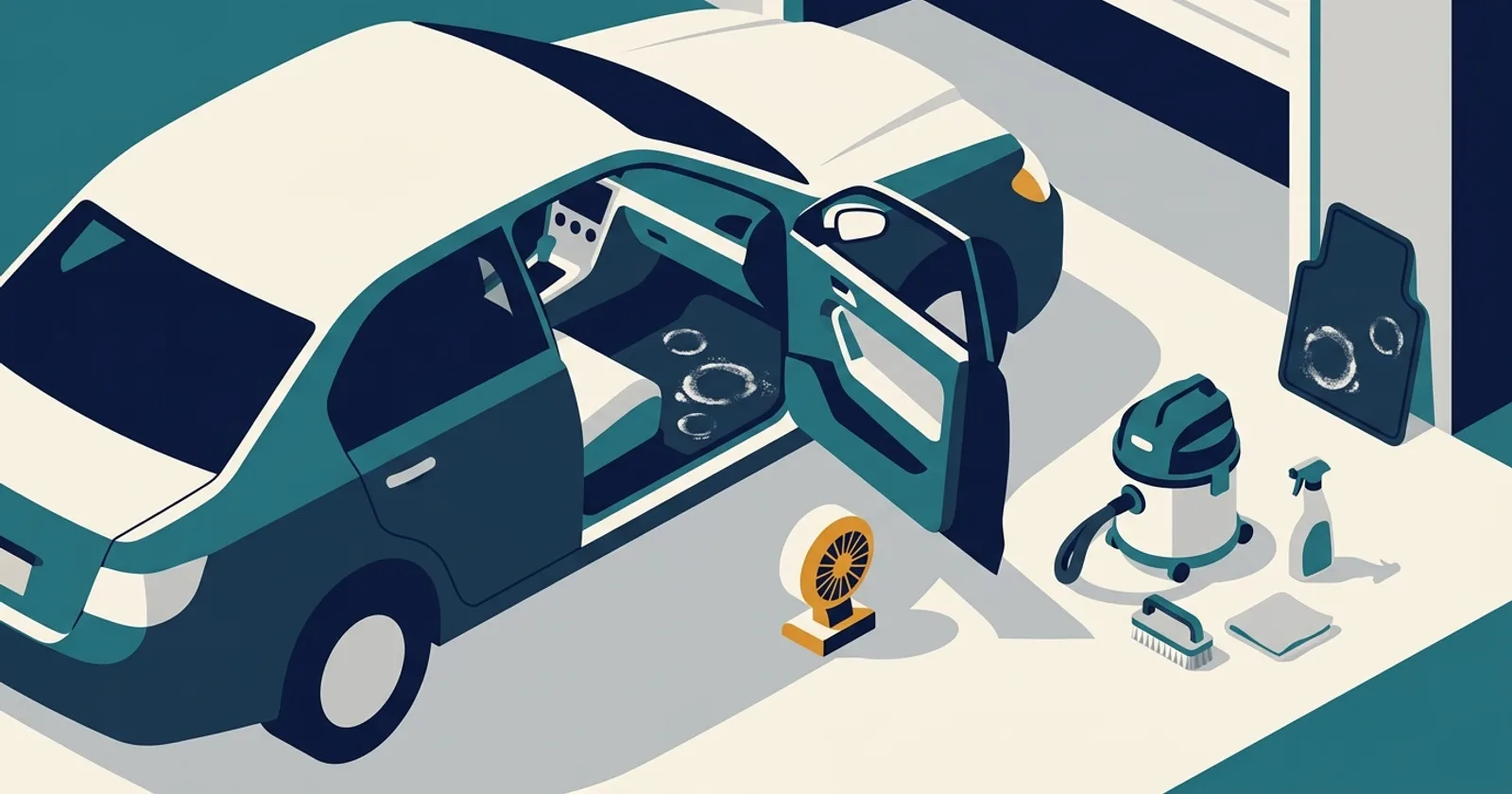
Vacuum and clean the cabin now, while it’s safe to vacuum. The same carmaker’s manual says to make sure the carpets and floor mats are completely dry. If the car will sit somewhere damp, the club advice suggests desiccant packs inside. Take out every wrapper and crumb. Both the CDC and King County Public Health say not to leave food in a car, because it draws rodents. Salt or soda stains from last summer? See our guide to salt rings in car carpet before you shampoo, and let it dry fully.
The cover
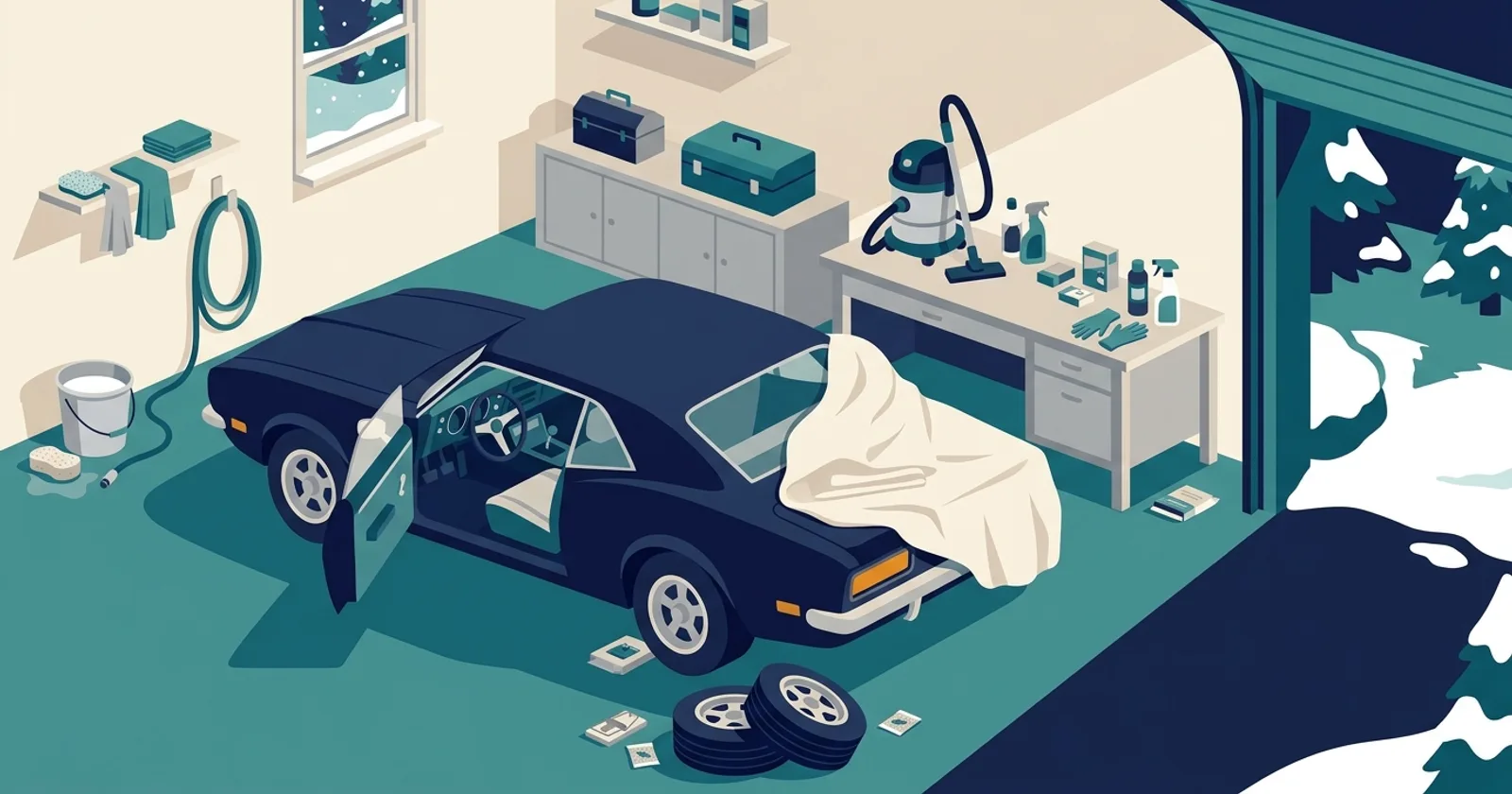
Indoors in a dry garage is best. One carmaker’s manual says to store the car indoors if possible, under a breathable cover. Plastic sheeting traps moisture that can damage the paint. One cover maker says indoor covers are generally more breathable. Outdoor covers are made to be waterproof and more UV-resistant. Put the cover on only after the car is clean and dry.
Keeping mice out
In a classic-car forum thread about storing an older car outdoors, one reply simply advised lots of mouse prevention. Another owner, leaving a 1960s car for six to nine months, was told to use rodent repellent.
If mice are likely, roadside-club advice says to seal the tailpipe, the engine air filter inlet and other easy openings. It says steel wool works and copper wool is better. Traps, poisons and repellents are other options. It also notes that hard evidence for dryer sheets and mothballs is difficult to come by. If you plug anything, follow the club’s tip to keep a written list of every step in the car.
King County Public Health says rodents get into the cabin through rusted areas, ducting and gaps where cables pass. Nests often turn up in four places:
- between the battery and the frame
- near the wiper motors
- under the air intake ducting
- in the air filter
Droppings or a nest in spring
The CDC says hantavirus can spread when fresh urine, droppings or nesting materials are stirred up and the virus gets into the air. U.S. tracking began in 1993 during an outbreak in the Four Corners region. That’s where Arizona, Colorado, New Mexico and Utah meet. This is not medical advice. Follow the CDC’s own steps and ask your local health department about your situation.
For vehicles, the CDC’s guidance says, in short:
- Open the hood, doors and trunk. Let the car air out for 20 minutes in a well-ventilated space.
- Wear plastic gloves and a long-sleeved shirt. Remove the battery cables before inspecting the engine bay.
- Don’t vacuum or use a high-pressure sprayer on droppings, urine or nests until they’ve been disinfected.
- Spray with disinfectant until fully soaked and let it sit 5 minutes, or as the label says. The CDC’s bleach mix is 1 part bleach to 9 parts water.
- Pick up the waste with paper towels, throw it away, then disinfect the rest of the area.
- If there’s nesting in the air intake, remove both the nest and the filter and fit a new filter.
After the droppings are removed, the CDC says to shampoo carpets and upholstery. Use a commercial disinfectant or a commercial-grade steam cleaner. If nesting in the air intake system is extensive, King County says a qualified mechanic may need to replace hoses, ducts or fans. Tell the mechanic about the hantavirus risk. If a smell is still there after cleanup, see our guide to car smells that won’t leave.
In spring
Undo everything on your list first. Unplug the tailpipe and intake, then reconnect the battery if you disconnected it. Then follow our safe order for the first wash on a car that has been sitting. If the paint is original and faded, here is how to clean and protect it without polishing.
These steps come from a carmaker’s manual, roadside-club advice and public health agencies, checked October 2026. How we check our sources: methodology.
Sources
Based on 11 sources · How we price
- Iowa State University Extension, Frost and Freeze Dates in Iowa (Polk County): yardandgarden.extension.iastate.edu/frost-and-freeze-dates-iowa-obrien-ringgold
- Honda owner’s manual, Storing Your Vehicle: techinfo.honda.com/rjanisis/pubs/om/CR0303/CR0303O00295A.pdf
- AAA, Tips for Parking and Storing Your Car for Extended Periods: mwg.aaa.com/via/car/parked-car-storage-tips
- CarCovers.com, Choosing the Right Car Cover: carcovers.com/resources/choosing-the-right-car-cover.html
- CDC, Hantavirus Prevention (Internet Archive copy, September 2026): web.archive.org/web/20260928151644/https://www.cdc.gov/hantavirus/prevention/index.html
- CDC, Cleaning Up After Rodents (Internet Archive copy, October 2026): web.archive.org/web/20261004143806/https://www.cdc.gov/healthy-pets/rodent-control/clean-up.html
- CDC, Reported Cases of Hantavirus Disease (Internet Archive copy, September 2026): web.archive.org/web/20260929110536/https://www.cdc.gov/hantavirus/data-research/cases/index.html
- King County Public Health, Cleaning infested vehicles: kingcounty.gov/en/dept/dph/health-safety/environmental-health/getting-rid-of-rats-mice/cleaning-infested-vehicles
- Community discussion, r/classiccars, storing vintage cars outdoors until a garage is built: reddit.com/r/classiccars/comments/1kd25f3
- Community discussion, r/classiccars, storing a 1960s car for six to nine months: reddit.com/r/classiccars/comments/1sz0mvx
- Community discussion, r/classiccars, outdoor winter storage under a cover: reddit.com/r/classiccars/comments/1p21ksq